
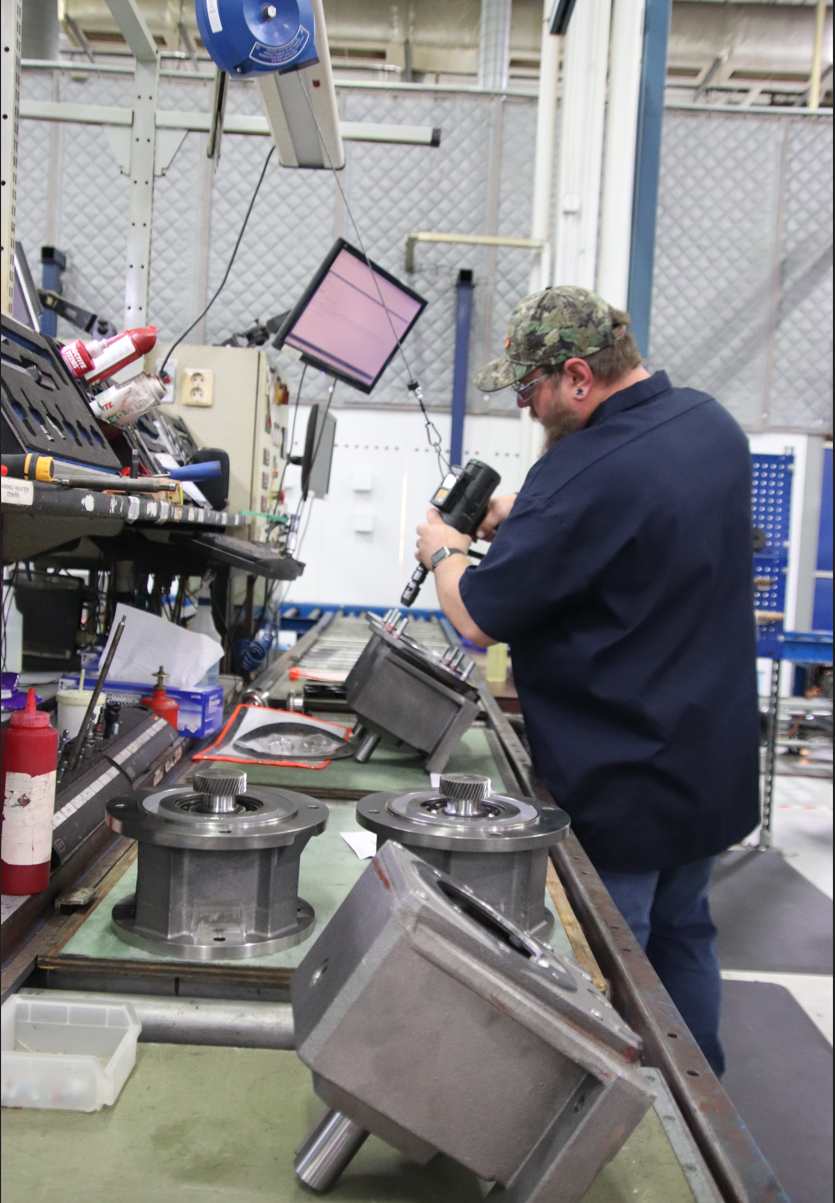
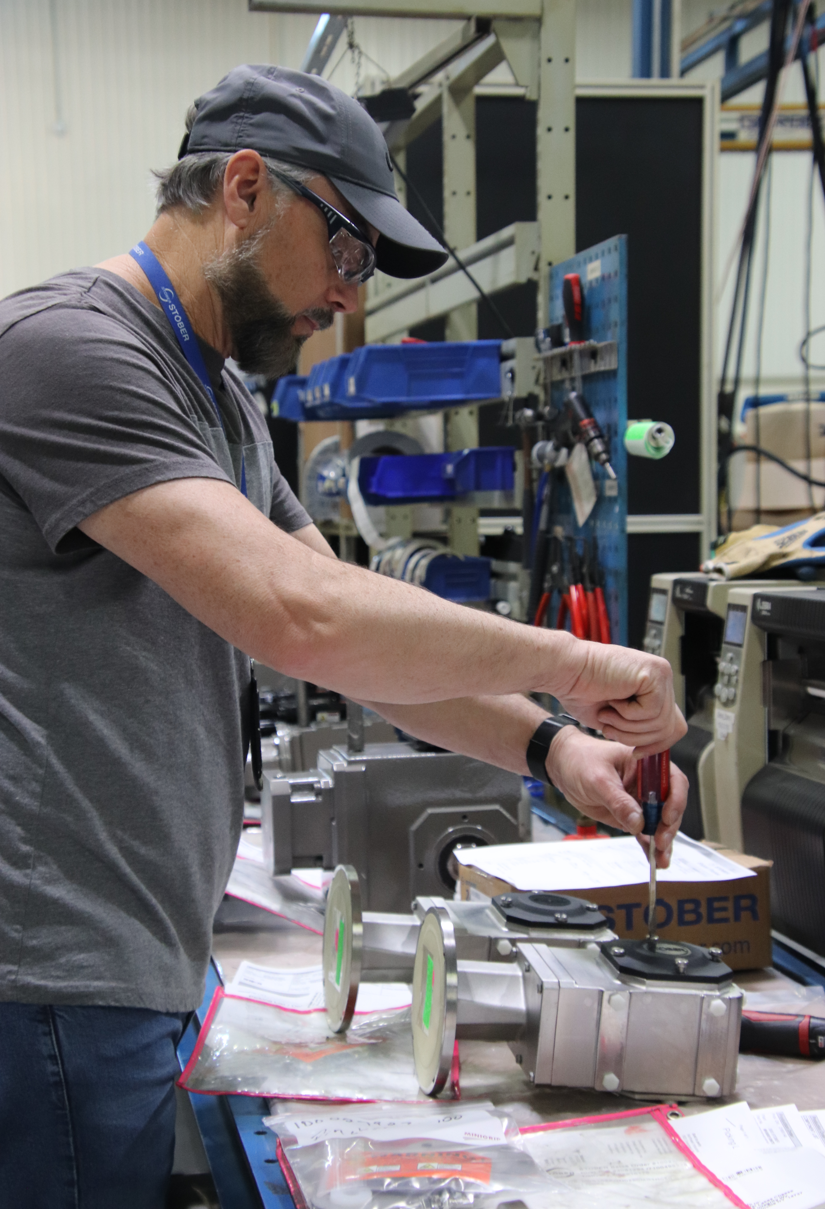
A motor can spin quickly while the machine needs slower movement and more turning force; the purpose of a gearbox is to match those demands. By adjusting the speed and torque, gearboxes allow equipment to move loads at the appropriate pace.
For machine builders, that shapes everything from conveyor startup to robotic positioning. Grasping how gearing works makes it easier to choose a drive that fits the job and keeps production moving smoothly.
Gearbox basics: A mechanical device for power transmission
In short, a gearbox is a mechanical device that transfers power through meshing gears. Power enters through an input shaft connected to an engine or motor, then it leaves through an output shaft.
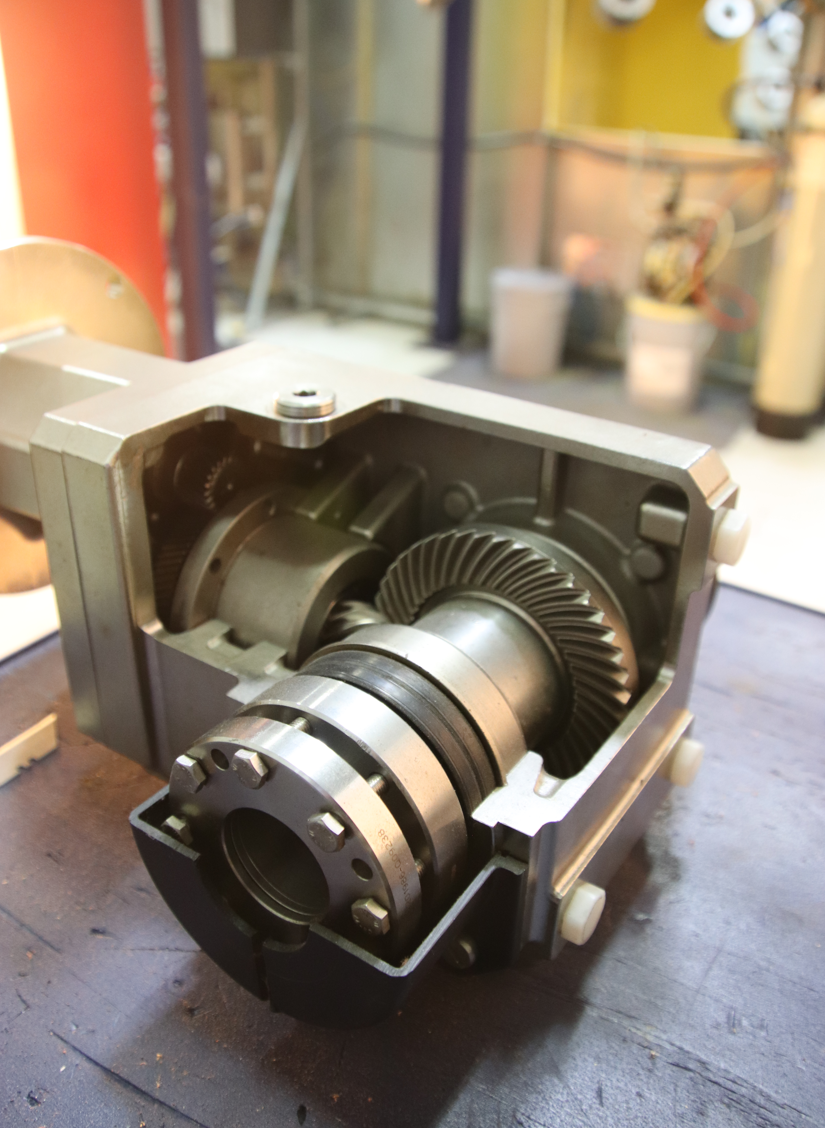
Its gears, bearings, shafts, and housing all work together under load. The housing is tasked with resisting operating forces without disturbing the alignment.
What are the four main functions of a gearbox?
Four of the main functions are changing rotational speed, changing torque, establishing rotational direction, and transmitting power between shafts. Their importance ultimately depends on the design and application.
Speed reduction and torque multiplication are commonly seen in manufacturing settings. Also, gear arrangements can establish an opposite rotation direction without reversing the motor. A fixed arrangement establishes that relationship; selectable reversing requires additional mechanisms.
How a gearbox changes speed and torque
Gear ratio defines the relationship between input and output rotation. With 10:1 reduction, the input shaft turns ten times for each output revolution. At 1,500 rpm input, the output speed is 150 rpm.
Ignoring losses, that ratio multiplies the input torque by ten. Actual output torque is lower since the friction and other losses consume power. Gearing trades speed for torque, but it doesn’t create power.
Multiple stages combine ratios when one gear pair can’t provide the required reduction. On conveyors, this reduction provides the turning force needed to start and move heavy materials. Gearing also increases speed; geared wind turbines use it to connect slow blade rotation with faster generator rotation.
Gearbox designs: Spur gears, helical gears, and planetary gear
Gear geometry and shaft arrangement influence the load capacity, noise, packaging, and efficiency. Worm gearboxes are another typical option, especially where shaft arrangement and larger reductions suit the application.
Spur gears
Spur gears have straight teeth that are parallel to the shaft axis. They’re used between parallel shafts and provide a straightforward way to transfer rotation.
Because spur gear teeth engage more abruptly than helical gear teeth, spur gears can produce more noise at higher operating speeds. Operating speed and acceptable sound levels matter immensely when comparing designs.
Helical gears
Helical gears have angled teeth that gradually engage. This supports smoother power transfer and quieter operation than comparable spur gearing.
Overlapping tooth engagement supports high load capacity, making them ideal in demanding industrial drives. They also generate axial thrust, which the bearing arrangement needs to accommodate.
Planetary gear
Planetary gearboxes contain a central sun gear, surrounding planet gears, a carrier, and an internal ring gear.
Multiple planets share the transmitted load, supporting high torque density within a compact package. Robotics applications benefit from that combination, but precision ultimately depends on backlash and stiffness. We cover these tradeoffs in our guide to torque density and accuracy in robotic actuators.
Why industrial gearboxes matter
Industrial gearboxes connect motor capabilities to the actual machine requirements. Correct selection helps equipment maintain throughput while preventing overload, excess heat, and premature wear.
Continuous duty calls for careful attention. A gearbox has to handle sustained torque and dissipate heat throughout operation; that being said, a peak torque rating alone doesn’t establish suitability for an entire production shift.
Servo applications add requirements for rapid acceleration, stopping, and positioning. Learning how servo motors work helps explain how gearbox stiffness, backlash, and motor compatibility impact machine performance.
Industrial gearbox benefits for motion control
Speed reduction allows a motor to run within the right operating range while delivering the load’s required speed and torque. That supports a smaller motor, provided power, acceleration, and thermal requirements still fit.
Plus, gearing reduces the load inertia reflected to the motor by the square of the reduction ratio. This improves the relationship between motor inertia and load inertia, helping the servo system respond effectively.
Precision gearing supports repeatable movement by limiting lost motion and twist under load. However, the couplings, mounting rigidity, feedback, and control tuning can all influence positioning.
Selecting an industrial gearbox for an application
To start, assess the load and motion profile. STOBER’s guide on what to look for in a gearbox explains why rating methods and operating conditions demand close attention.
Review these requirements:
- Output torque: Calculate continuous, acceleration, and peak demands, including shock loads.
- Output speed: Establish normal operation and maximum speed, then determine the required ratio.
- Shaft orientation: Check whether inline, parallel, or right-angle geometry fits the machine.
- Environmental exposure: Evaluate temperature, moisture, dust, chemicals, and cleaning methods.
- Precision: Specify the acceptable backlash and torsional stiffness for the motion task.
- Motor compatibility: Confirm mounting dimensions, shaft connections, allowable input speed, and bearing loads.
Include the operating hours, starts per hour, and expected service life. This is crucial since a gearbox that fits physically can still be unsuitable thermally or mechanically.
Check the external forces at the output shaft. A pulley, sprocket, or overhung load adds bearing demands beyond the transmitted torque. Additionally, mounting position can affect lubrication requirements, while ambient heat can reduce the available thermal capacity. Sharing these details early provides a clearer basis for sizing and helps avoid changes during installation.
Gearbox maintenance, reliability, and service support
Lubrication is essential for separating contacting surfaces, reducing friction, and protecting gears and bearings under load. Lubricant viscosity and quality have an impact on cold startup and stability at elevated temperatures.
Always follow the manufacturer’s lubricant specifications, fill quantities, and service instructions. Maintenance requirements vary by gearbox design, including for sealed units. Check the model’s specified operating temperature limits and any applicable cooling requirements.
Keep track of noise, vibration, temperature, and leaks, comparing them against normal operating conditions. Vibration monitoring helps spot developing problems, especially when reviewed alongside load and speed data. STOBER’s industrial gearbox maintenance tips cover the most helpful inspection and monitoring steps.
For maintenance teams, consistent records make checks more beneficial. Log the operating speed, load, measurement location, and recent changes whenever readings are taken. A rising vibration trend after a coupling replacement calls for a different investigation than a gradual increase. High-quality records help technicians distinguish an installation issue from developing wear and plan service around production needs ahead of an unexpected shutdown.
What happens if a gearbox is damaged?
Damaged teeth or bearings cause noise, vibration, excess heat, and reduced positioning accuracy, while seal damage can allow lubricant loss or contamination. Severe damage interrupts power transmission or seizes the gearbox, stopping production.
Always stop affected equipment according to plant procedures, then have qualified personnel investigate. Seek professional guidance for unusual loads, temperatures, or recurring faults.
Gearbox applications in modern manufacturing
Automation equipment needs gearboxes to move products, index tables, and coordinate assembly operations. Robotic systems count on compact drives that balance payload capacity with controlled movement.
Packaging machinery uses gearing to drive conveyors, feeding mechanisms, and coordinated motion axes. In food manufacturing, repeated cleaning comes with washdown requirements, making it important for the materials, seals, surface design, and ingress protection to suit the sanitation process.
Each application places different demands on the same, simple task: delivering motion where the machine needs it.
How STOBER supports gearbox selection
STOBER provides precision gearbox solutions, including inline servo and right-angle configurations. Our synchronous servo inline geared motors combine motors with planetary or helical gearing. For food processing or other washdown environments, STOBER’s stainless steel cLEAN System combines our KSS gearbox with a cLEAN Motor.
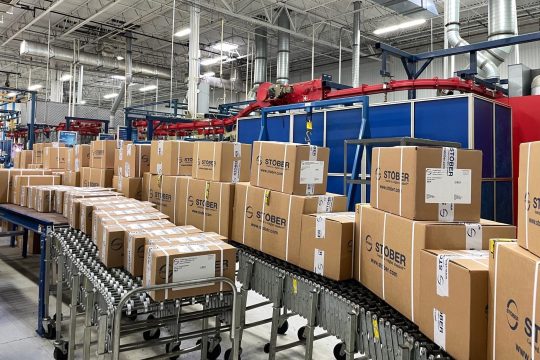
STOBER builds and ships most gearboxes in one day from our United States operation. For urgent support, call 888-786-2371 during business hours or 606-563-6035 for after-hours emergency support.
 What is the purpose of a gearbox?
 Causes of misalignment in gearboxes
 Rebuilding a gearbox for industrial applications
 How to choose the right hollow-type output shaft for your application