
Modern robotic systems are expected to deliver more power and speed while maintaining precision in increasingly compact designs. That creates a major engineering challenge: balancing torque density vs. accuracy in robotic actuators.
Torque density refers to the amount of torque an actuator can produce relative to its size or weight, while accuracy refers to how precisely a robotic system can reach and repeat a target position. Both directly affect robotic performance, but improving one can sometimes make the other harder to achieve.
For example, increasing torque density often requires compact motors or higher gear ratios that maximize output torque in a smaller footprint. Those same design choices may introduce backlash in robotic actuators, reduce backdrivability, or affect actuator control fidelity.
Systems designed around precision may also require larger components or lower gear reduction ratios that increase overall size and weight. These actuator design tradeoffs affect everything from payload capacity to control responsiveness when designing high-performance robotic joints.
Why torque density matters in modern robotic design
Torque density has become one of the most important performance metrics in robotic actuators, since robotics systems continue to shrink while performance demands increase.
Higher torque density allows engineers to generate more force from smaller actuators, supporting compact actuator design and lighter robotic systems. In robotic arms and collaborative robots, along with mobile platforms, reducing actuator size and weight can improve agility and reduce inertia, creating more efficient movement.
High torque density also improves payload capacity. A compact actuator that delivers high torque and strong peak torque performance allows robots to handle heavier loads without increasing joint size. Engineers also evaluate power density in actuators when trying to maximize force output within tight space constraints.
Applications that commonly prioritize high torque density include:
- Collaborative robots
- Surgical robotics
- Mobile robotic systems
- Humanoid robotics
Achieving high torque density requires careful design choices. Increased motor size might generate more torque directly, but larger motors add weight and increase power consumption. Increasing the gear ratio is another option that allows a smaller motor to produce greater output torque through mechanical reduction.
While effective, higher reduction ratios can reduce responsiveness and backdrivability while increasing the risk of backlash. That’s why the discussion around torque density vs. precision is so important in robotics design.
Engineers often spend considerable time evaluating gearboxes for the robotics industry and comparing how different transmission technologies affect stiffness, backlash, power density, and similar factors in actuators. nsfer, heat buildup, stiffness, and feedback accuracy. Even small issues like bearing deflection or thermal expansion can quietly reduce robotic joint load capacity and long-term precision.
How accuracy impacts robotic performance and control
Accuracy in robotic systems involves more than reaching a commanded position. In high-performance motion systems, accuracy also includes repeatability and responsiveness, along with the ability to maintain stable movement under changing loads.
Several factors influence actuator positioning accuracy, including:
- Backlash and transmission quality
- Actuator stiffness
- Encoder resolution
- Gear ratio and responsiveness
The impact of backlash and stiffness
One of the biggest contributors to positioning error is backlash in robotic actuators. Even small amounts of mechanical play inside a gearbox can create positioning inconsistencies, especially during rapid direction changes or repetitive motion cycles.
In certain applications – for example, robotic welding, electronics assembly, and automated inspection – small errors can affect product quality and repeatability. Minimizing backlash is a priority in precision robotic systems.
Actuator stiffness also plays an important role. Systems with excessive compliance may flex under load, leading to delayed response or inconsistent positioning. Higher actuator stiffness generally improves motion control accuracy, since the actuator reacts more predictably to commands and external forces.
How transmission design influences precision
Actuator transmission design directly affects both precision and responsiveness. High gear ratios can improve positional resolution because the motor operates through greater reduction. Harmonic drives and planetary gear systems are commonly used in robotic actuators; they support compact packaging and high torque density.
But higher gear reduction can also reduce responsiveness and backdrivability. Lower gear ratios typically improve dynamic response and smoother force interaction, but they require greater motor torque to produce the same output torque.
The role of control systems and feedback
Mechanical performance alone doesn’t determine robotic accuracy. Control systems are also a key factor in actuator control fidelity and motion repeatability.
Modern robotic actuators rely on advanced encoders and sensors, along with feedback loops, to maintain precise movement. Even with sophisticated software, mechanical limitations still matter. Poor transmission quality and insufficient stiffness or excessive backlash can limit overall accuracy.
This becomes especially important when selecting the right gearbox for robotic automation, since gearbox behavior directly affects backlash, responsiveness, efficiency, and long-term precision.
The core tradeoffs: Balancing torque density, accuracy, and control
Balancing torque density and precision with responsiveness is one of the most important aspects of actuator design. Every design decision influences multiple areas of system performance, so engineers must evaluate actuator performance tradeoffs carefully rather than optimizing for a single metric.
Gear ratio vs. responsiveness
Increasing the gear ratio allows a smaller motor to generate higher output torque, improving high torque density and supporting more compact robotic joints.
The tradeoff is that higher reduction can lead to decreased backdrivability and responsiveness. Lower gear ratios generally boost responsiveness and dynamic interaction, though they require larger motors or greater motor torque to achieve the same output torque.
Torque vs. speed
Increasing torque through gearing can reduce achievable output speed or require the motor to spin at much higher velocities.
For example, a robot designed for heavy payload handling may prioritize high torque over speed, while a pick-and-place system may prioritize fast cycle times and precise positioning.
Backdrivability and thermal performance
Backdrivability is especially important in collaborative robotics and dynamic interaction systems. It allows external forces to move the system more naturally, improving force sensitivity and dynamic load control.
Thermal performance is another major consideration because heat generation increases as torque demands and motor speeds rise. Excessive heat can reduce efficiency and accelerate wear, negatively affecting motion control accuracy over time.
How to choose the right balance for your robotic application
Selecting the right actuator design starts with understanding the priorities of the application itself. Different robotics systems place different demands on torque, precision, responsiveness, and efficiency.
For example, systems designed for compact packaging or heavy lifting often prioritize torque density and high torque. Precision automation systems may focus more heavily on actuator positioning accuracy and low backlash, while dynamic robotics systems may prioritize backdrivability and smooth force interaction.
When evaluating robotic actuators, engineers should focus on:
- Payload and speed requirements
- Precision and repeatability goals
- Thermal and efficiency constraints
- Space and weight limitations
It’s also important to evaluate the actuator as part of the entire motion system rather than as an isolated component. Motor selection, gearbox behavior, encoder resolution, and control algorithms work together to determine final performance.
In some cases, a larger motor paired with a lower gear ratio may improve responsiveness and reduce backlash. In other cases, a smaller motor with higher reduction may better support compact actuator design and high torque density. The best solution depends on the overall balance between torque density vs. precision, efficiency, control requirements, and similar factors., efficiency, control requirements, and similar factors.
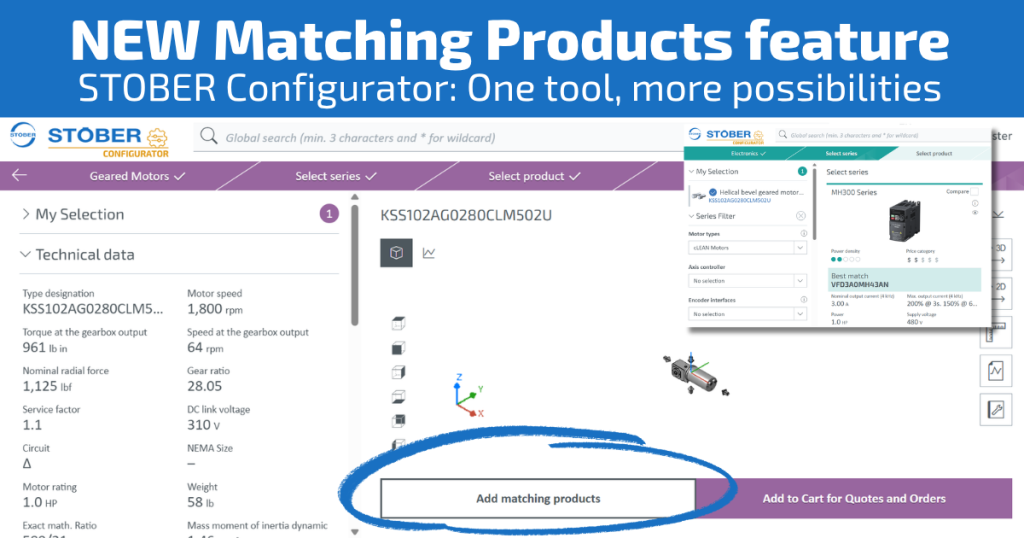
Modern design tools can simplify this process, helping engineers compare gear ratios and evaluate torque ratings, while also analyzing thermal performance under realistic operating conditions. Tools like the STOBER Configurator can help identify actuator and gearbox combinations that align with specific robotic application requirements.
Ultimately, successful robotic joint optimization depends on balancing mechanical design, control behavior, efficiency, and application requirements. When those requirements get tight, especially around precision and compact design or low backlash, it’s common to bring in motion expertise early. Tools like the STOBER Configurator help engineers compare integrated drive solutions and narrow down gearbox and actuator options before committing to hardware.
Overall, robotic joint design involves more than simply making motion possible. It revolves around making it reliable, repeatable, and stable enough that the rest of the system can depend on it — cycle after cycle, shift after shift.

 Introducing the cLEAN Integral Unit: A compact washdown drive solution for OEMs
  One tool, more possibilities: Discover complete STOBER solutions with new Matching Products feature
  What are the main components of a gearbox?
  How long does a gearbox last? Lifespan, warning signs, and maintenance