
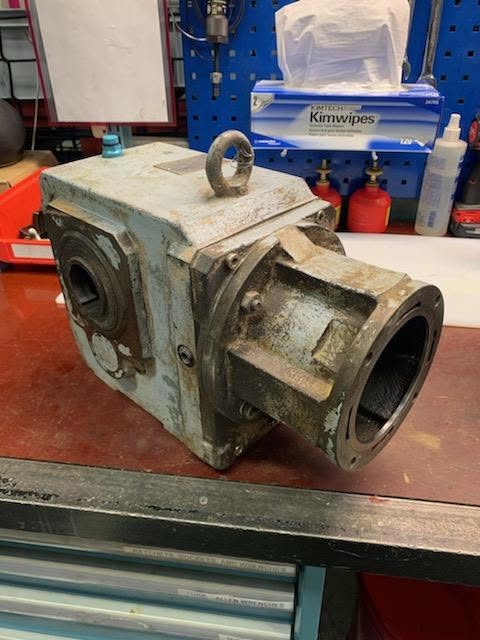
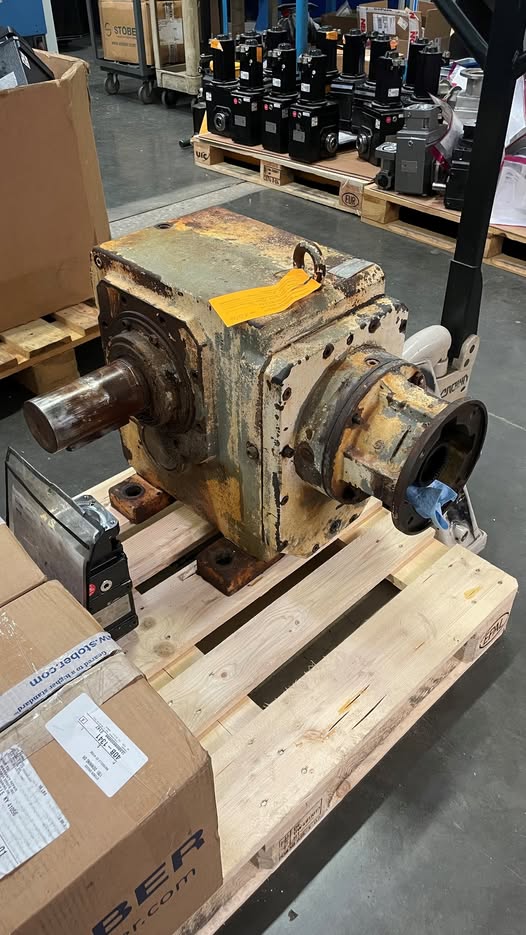
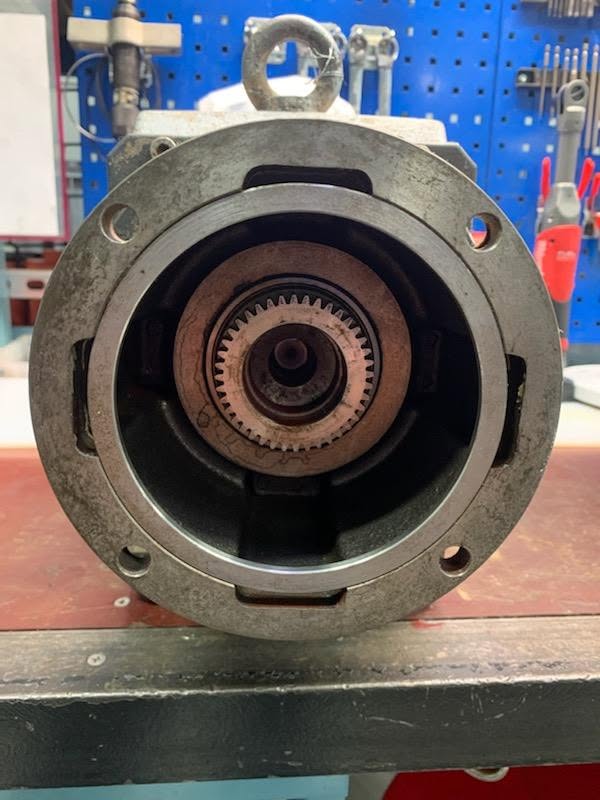
The right industrial gearbox can operate for many years, but its lifespan ultimately comes down to the application, operating conditions, installation, and maintenance.
How long does an industrial gearbox last?
There’s no universal lifespan for an industrial gearbox. Gearboxes contain gears inside a housing and change speed, torque, direction, or any combination of the three, with the forces on components ranging widely from one application to another.
Manufacturers refer to application data to calculate expected service life. Duty cycle reflects the operating frequency and duration, bearing life calculations estimate how long bearings will last under a given load and speed, and mean time to failure draws on field data across many units.
STOBER gearboxes have an average mean time to failure of 9.1 years in 24/7 harsh washdown environments. Our application engineers can evaluate the motion profile, loads, operating time, environment, and other requirements to calculate life for a given application.
What shapes industrial gearbox lifespan?
Gearbox type is important, but it’s the application that often has a greater effect on service life. Consider these seven factors:
| Factor | How it affects lifespan | What to check |
| Sizing | Undersized gearboxes may be overloaded. | Torque, speed, and service factor |
| Load profile | Shock loads, reversals, and frequent starts increase stress. | Peak loads and the full motion cycle |
| Duty cycle | Continuous operation creates different thermal demands than intermittent use. | Hours, cycles, and rest periods |
| Installation | Misalignment and improper mounting can load gears and bearings unevenly. | Shaft alignment, orientation, couplings, and fasteners |
| Lubrication | The wrong type, amount, or condition increases friction and wear. | Specification, level, viscosity, and condition |
| Temperature | Excess heat degrades lubricant and seals. | Normal baseline and operating limits |
| Environment | Water, dust, chemicals, and food residue can enter the gearbox. | Seals, protection rating, and washdown exposure |
Faster speeds, heavier products, or a revised motion profile can push a gearbox beyond its original selection criteria. If there are repeated failures, it’s time for a complete application review.
Lubrication and temperature
Lubricant separates surfaces, controls friction, and takes away heat. Its type and viscosity need to match the load, speed, temperature, and environment. Too little leaves components vulnerable, while too much increases churning and heat.
No single oil-change interval applies to every industrial gearbox, so follow the product documentation and account for the duty cycle and operating environment. However, some STOBER gearboxes are lubricated for life and designed to be maintenance-free.
Contamination and water ingress
Dust, moisture, cleaning chemicals, and food residue can damage lubricant, seals, bearings, and gears. In washdown settings, liquid can enter through seals, vents, breathers, or the motor interface. Suitable sealing and an appropriate protection rating limit water ingress and corrosion.
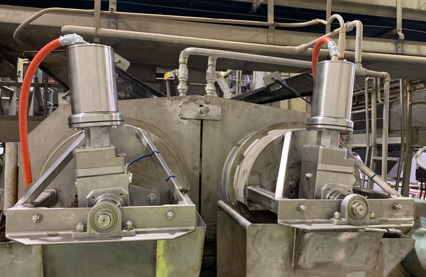
Food, beverage, and packaging operations need equipment built for frequent, high-pressure cleaning. The STOBER cLEAN System combines a KSS stainless steel gearbox, cLEAN Motor, cLEAN Cable, and cLEAN Drive in a hygienic, sealed package for the most demanding washdown applications.
Warning signs that a gearbox might be failing
A gearbox doesn’t need to become completely inoperable before it’s in trouble. Beware of:
- New whining, grinding, rumbling, or knocking
- Rising vibration or operating temperature
- Oil leaks or cloudy, foaming, darkened, or contaminated lubricant
- Increased backlash or reduced positioning accuracy
- Inconsistent torque or output
- Corrosion, damaged seals, or metal particles in the oil
Changes from the machine’s baseline deserve attention, as continued operation could create a safety hazard or damage connected components. Professional inspection can identify gearbox damage before the costs of downtime compound.
How maintenance can extend gearbox life
The most practical gearbox maintenance programs start with repeatable inspections. Look for any leaks, damaged seals, loose fasteners, mounting problems, misalignment, unusual noise, heat, and vibration.
For serviceable gearboxes, oil analysis can often reveal water, dirt, wear metals, oxidation, or viscosity changes. Organize your findings, repairs, and operating changes by asset so trends are simpler to spot.
While a maintenance-free design might not need oil changes, it should still be checked consistently for leaks, damage, heat, vibration, and performance changes.
When should you repair, retrofit, or replace a gearbox?
The answer depends on the extent of the damage, age, parts availability, machine requirements, and downtime risk. A repair might suit limited seal or bearing damage, but a retrofit could be better when the original product is obsolete or when the application demands different performance. Severe damage or recurring failures typically point to replacement.
Always pinpoint the root cause, as a new gearbox can fail the same way if overload, misalignment, contamination, or another system problem persists.
How STOBER supports longer gearbox life
STOBER provides precision gearboxes, motors, complete drive systems, and matched gear motors for automation, robotics, packaging, food and beverage production, material handling, and other industries.
Our application engineers assist with sizing, life calculations, drawings, and troubleshooting. We proudly provide maintenance-free options, three- and five-year warranties depending on the product line, and one-day build-and-ship service for eligible products. Our aftermarket support covers repairs, retrofits, spare parts, and replacement drives, and our emergency application and installation support is available 24/7/365 in the U.S.
Frequently asked questions
Can an industrial gearbox last 20 years?
Some industrial gearboxes can operate for decades under ideal conditions. Age alone does not reveal the remaining life; review service history, vibration, temperature, lubrication, backlash, and wear for more context.
What causes a gearbox to fail prematurely?
The most common causes are incorrect sizing, overload, shock loading, misalignment, excess heat, poor lubrication, contamination, and water ingress. A root-cause analysis can separate a product issue from an installation, maintenance, or application issue.
When should I contact STOBER?
Contact us when sizing a new drive, calculating expected life, investigating repeated failures, planning a retrofit, or arranging a repair or replacement. Early application support can resolve technical risks before they become production problems.
Plan for gearbox life before downtime decides for you
Long gearbox life starts with proper selection, installation, operation, and maintenance. Closely monitor temperature, vibration, lubricant, noise, and performance so you have time to act before secondary damage develops.
Contact the STOBER team today for personalized support.
 Rack and pinion systems for robotics: Benefits, design, and applications
  STOBER’s stainless steel solution helps food processor improve reliability in harsh washdown environment
  The science of gear tooth design: How geometry impacts performance