
When engineers and machine builders are selecting a motor, one of the most common questions is whether to use an alternating current (AC) motor or a direct current (DC) motor. While both technologies convert electrical energy into mechanical motion, the way they operate—and where they perform best—differs significantly.
Understanding these differences is critical for building reliable, efficient systems, especially as modern applications demand higher precision, wider speed ranges, and lower maintenance.
A quick look at DC motors
A DC motor operates using direct current, where electrical current flows in a single direction. Historically, DC motors were popular because they offered simple speed control and high starting torque, making them attractive for early variable‑speed applications.
However, most traditional DC motors rely on brushes and commutators to transfer current to the rotor. These components wear over time, leading to higher maintenance requirements, reduced uptime, and shorter service life—particularly in industrial environments.
As automation and drive technology have evolved, many of the advantages once associated with DC motors are now available in modern AC motor solutions, without the drawbacks.
Understanding AC motors
An AC motor uses alternating current, where the flow of electricity periodically reverses direction. AC motors are widely used in industrial applications because of their durability, efficiency, and compatibility with variable frequency drives (VFDs).
There are two primary types of AC motors:
- Induction (asynchronous) motors
- Synchronous motors, including permanent magnet designs
Traditional induction motors depend on slip, or the difference between rotor speed and magnetic field speed, to generate torque. While reliable, this slip results in efficiency losses and limits performance at very low speeds.
This is where modern AC motor technology delivers a clear advantage.
Permanent magnet AC motors: A modern advantage
Permanent magnet AC (PMAC) motors, also known as synchronous permanent magnet motors, eliminate many of the limitations associated with induction motors. Instead of inducing current in the rotor, PMAC motors use permanent magnets, allowing the rotor to rotate in sync with the stator’s magnetic field.
STOBER’s permanent magnet AC motors offer several key advantages:
- Higher efficiency and lower heat, since there is no lag between applied and induced magnetic fields
- No slip, resulting in accurate and repeatable speed control
- Smaller, more compact motor designs due to higher torque density
- Greater control, especially in dynamic or indexing applications
- A wide usable speed range, including reliable operation near zero speed
These characteristics make permanent magnet AC motors well suited for applications that historically relied on DC motors for control and low‑speed performance.
Where STOBER fits in
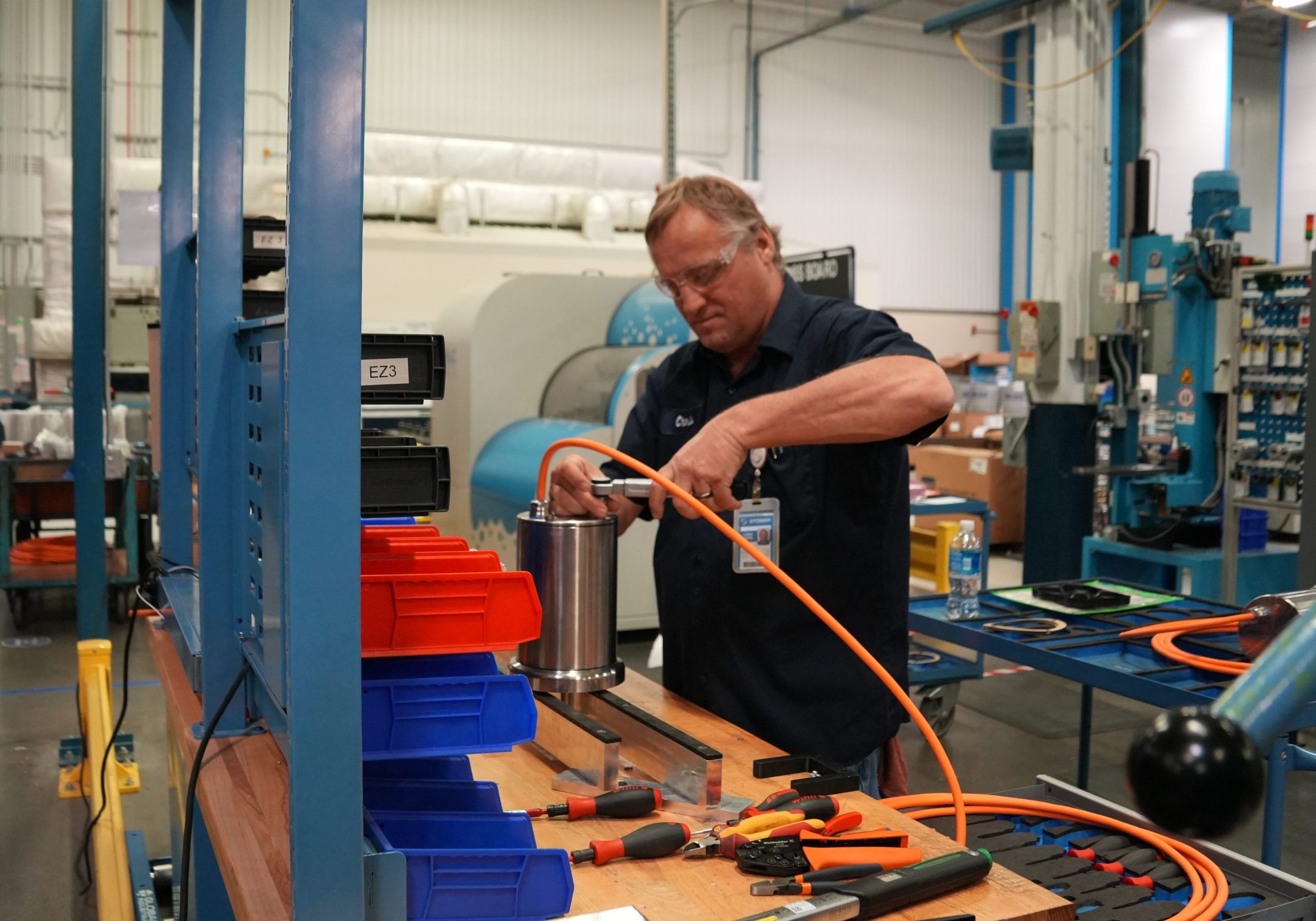
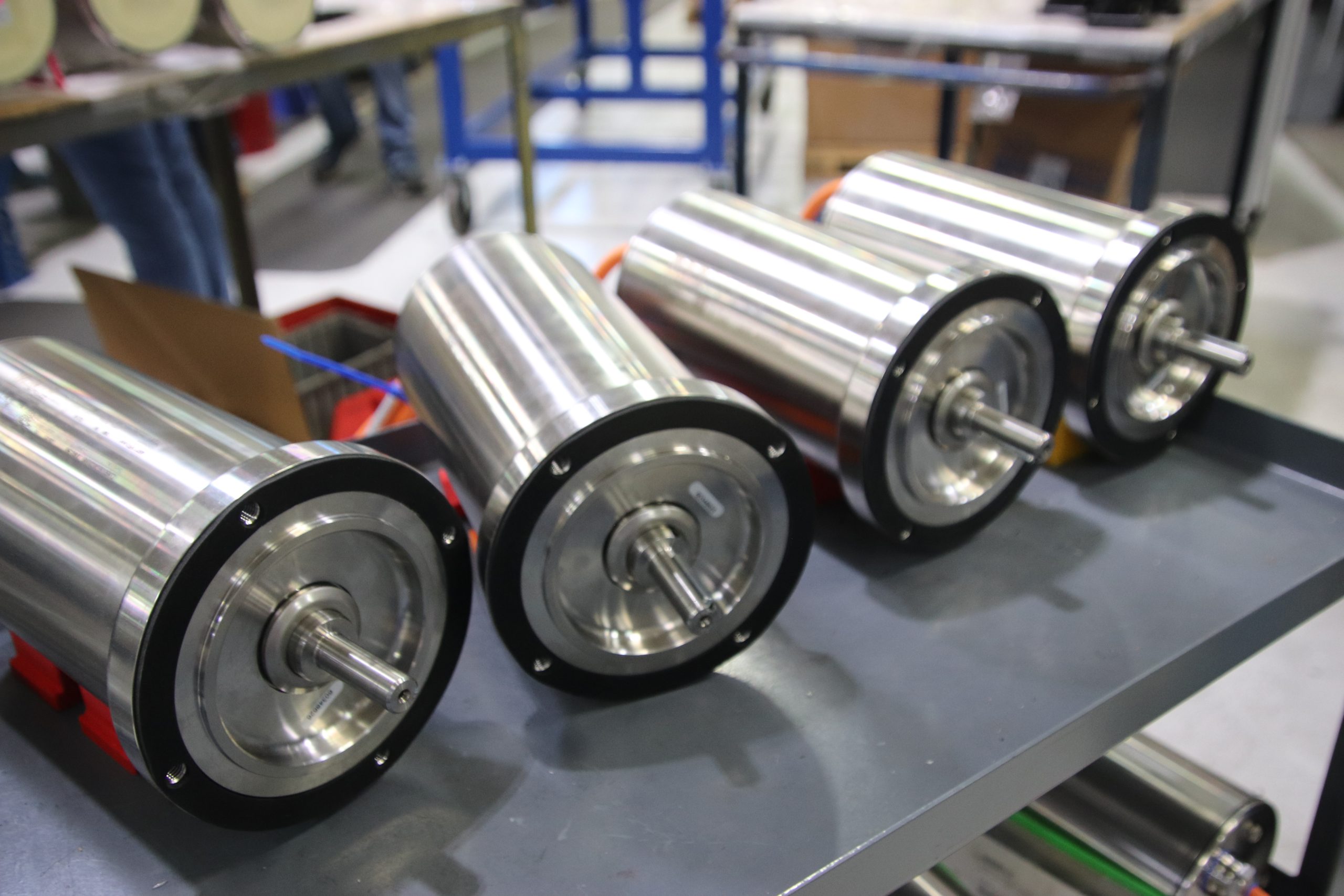
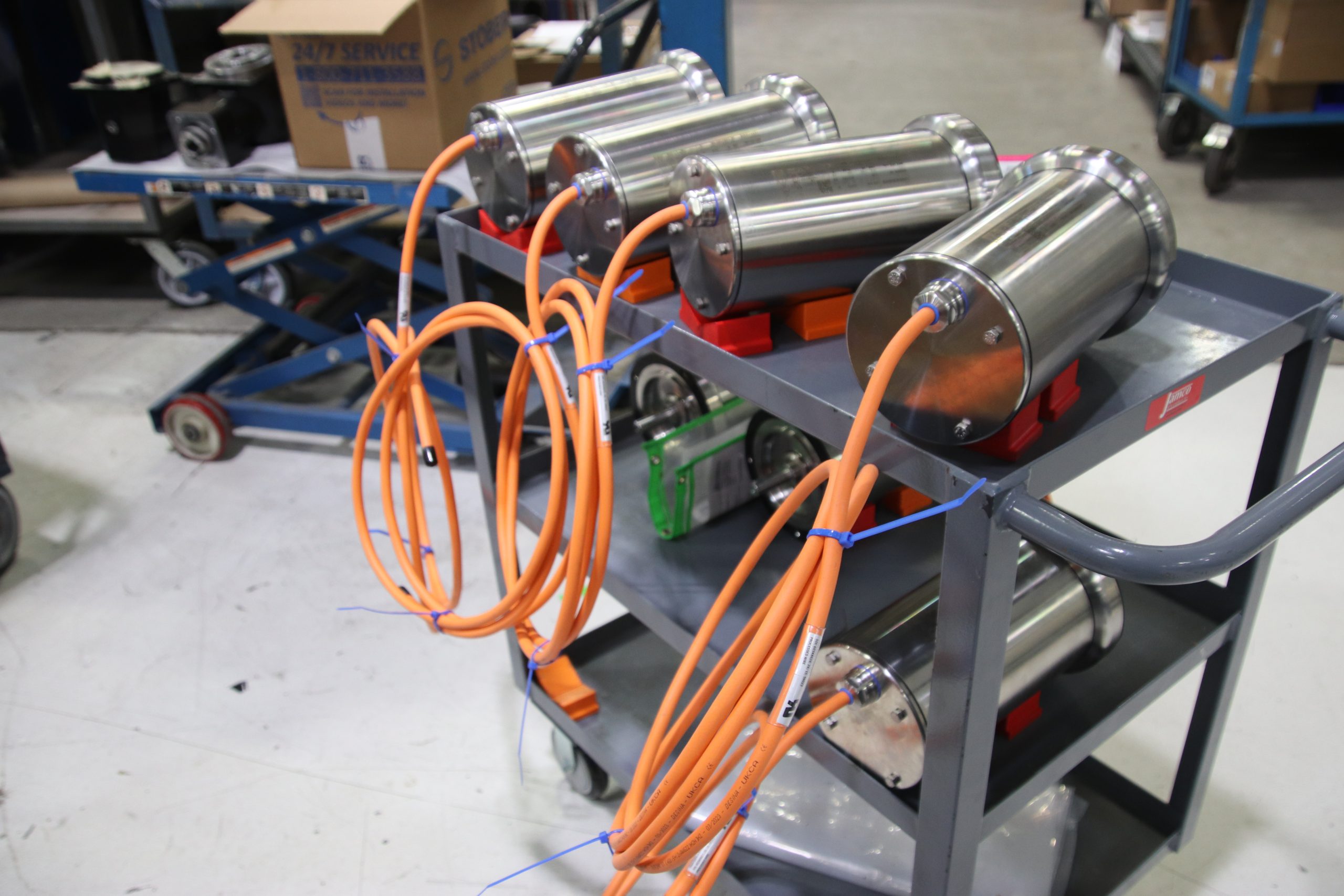
STOBER’s motor portfolio is built around this modern AC motor technology. The cLEAN motor, in particular, is a permanent magnet AC motor, designed to deliver precise, responsive motion while maintaining the efficiency and reliability expected from an AC system.
By leveraging permanent magnets in the rotor, the cLEAN motor provides:
- Precise speed and torque control across a wide operating range
- High efficiency with reduced heat generation
- Compact designs suited for space‑constrained machines
- Seamless integration with advanced drive technology for dynamic motion control
In practical terms, this allows machine builders to achieve DC‑like performance without brushes, commutators, or added maintenance.
DC vs. AC motor technologies: A practical comparison
| Feature | DC motor | Induction AC motor | Permanent magnet AC motor (PMAC) |
|---|---|---|---|
| Power type | Direct current (DC) | Alternating current (AC) | Alternating current (AC) |
| Rotor design | Wound rotor with brushes and commutator | Induced current in rotor | Permanent magnets on rotor |
| Speed control | Traditionally simple | Requires VFD, affected by slip | Precise, synchronous control with VFD |
| Slip | None | Yes | None |
| Low‑speed performance | Strong | Limited | Excellent, including near zero speed |
| Efficiency | Moderate | Good, but reduced by slip losses | High, with reduced losses and heat |
| Maintenance | Higher due to brush wear | Low | Very low |
| Motor size and torque density | Larger for equivalent torque | Larger frames at low speeds | More compact, higher torque density |
| Dynamic applications | Capable, but maintenance‑heavy | Limited | Ideal for frequent starts, stops, and indexing |
| Typical use today | Legacy or niche applications | Standard industrial use | Modern, high‑performance systems |
| STOBER alignment | Not typical | Traditional option | cLEAN motor (PMAC technology) |
Performance at the system level
Motor selection does not happen in isolation. By pairing a permanent magnet AC motor with a properly matched drive and gearbox, the system can deliver:
- Quieter operation with reduced vibration
- Improved reliability in washdown environments
- Elimination of mechanical wear components
- More precise and repeatable motion
This demonstrates how modern motor technology enables simpler, cleaner, and more reliable system designs.
Moving beyond the AC vs. DC debate
While AC vs. DC comparisons are useful for understanding motor fundamentals, most modern applications benefit from asking a different question:
How efficiently and reliably can the motor support the entire system?
Permanent magnet AC motors, such as STOBER’s cLEAN motor, offer the controllability once associated with DC motors, combined with the efficiency, durability, and integration capabilities expected from today’s AC solutions.
A smarter approach to motor selection
STOBER takes a systems‑level approach by integrating permanent magnet motors, precision gearboxes, and matched drives. This ensures that the advantages of permanent magnet technology translate into real‑world performance improvements, not just theoretical gains.
For applications requiring dynamic motion, frequent starts and stops, or reliable low‑speed operation, permanent magnet AC motors represent a clear step forward.
Looking for a modern alternative to DC or traditional induction motors?
Explore STOBER’s permanent magnet cLEAN motors and integrated drive systems, engineered for precision, efficiency, and reliability. Contact STOBER to discuss solutions that improve long-term performance.

 How to choose the right hollow-type output shaft for your application
  Eight warning signs that you need industrial gearbox repair
  STOBER recognized as Maysville Area Chamber’s Large Business of the Year
  Can you repair a gearbox? Signs, costs, and next steps