
On paper, the machine looks perfect. The accuracy meets the requirement, the backlash is within tolerance, and the system passes acceptance testing.
Then the machine ships. And six months later, performance starts to slip.
For many OEMs, this is where the confusion begins. If the machine met spec, why is accuracy degrading in the field? The answer is often found in the difference between initial backlash and backlash growth over time.
Why machines pass accuracy specs at startup
Backlash is easy to underestimate during design and testing. Most machines are evaluated when components are new, unloaded, and running in controlled conditions. At that point, backlash values often look acceptable, especially if the application does not immediately push the system to its limits.
In many cases, the gearbox or drive system meets the published backlash specification, and the machine achieves its required positioning accuracy during factory acceptance. From a checklist standpoint, everything looks right.
The problem is that initial backlash does not represent long-term machine accuracy.
The difference between backlash and accuracy
Backlash and accuracy are related, but they are not the same thing.
Backlash is the mechanical lost motion in a drivetrain. Accuracy is how precisely the machine reaches and holds position during operation. A system can appear accurate at startup even if it is prone to backlash growth under load.
As machines cycle, reverse direction, and experience varying loads, small amounts of wear accumulate. Gear tooth contact changes. Bearings see repeated stress. Over time, backlash increases, and accuracy begins to suffer.
This is why machines that pass specs at startup can fail to meet performance expectations in real applications.
How backlash grows over time
Backlash growth over time is rarely caused by a single failure. It is the result of gradual wear throughout the system.
Repeated reversing motion, high duty cycles, shock loads, and insufficient stiffness all contribute. If the gearbox is not designed to maintain tight tolerances under these conditions, lost motion increases. The change may be measured in arcminutes, but its impact on machine accuracy can be significant.
As backlash grows, the control system has to work harder to compensate. Positioning becomes less repeatable. Settling times increase. Surface finish and process quality begin to degrade.
Why machine accuracy issues show up in the field
Machine accuracy issues rarely appear all at once. They show up as subtle changes that operators and maintenance teams notice before engineers do.
Parts drift out of tolerance. Indexing becomes inconsistent. Vibration increases during direction changes. In high-precision machines, these symptoms often point back to growing backlash in the drivetrain.
By the time accuracy problems become obvious, the machine is already underperforming compared to its original design intent.
The hidden cost of designing to minimum backlash
Many designs focus on meeting a maximum allowable backlash value at startup. While this may satisfy a specification, it does little to protect long-term performance.
Gearboxes and motion components that are selected at the edge of their capability tend to wear faster. Lower torsional stiffness allows more deflection under load. Over time, this accelerates backlash growth and amplifies machine accuracy issues.
The result is a machine that technically met spec, but never delivers consistent performance over its service life.
Why stiffness matters as much as backlash
Backlash is only part of the equation. Torsional stiffness plays a major role in how a system responds to load changes and direction reversals.
Higher stiffness reduces elastic deformation, improves dynamic response, and helps maintain accuracy as the machine ages. Systems with higher stiffness are less sensitive to wear, making them better suited for high-precision, high-duty applications.
When stiffness is overlooked, even low initial backlash values can become meaningless over time.
Designing for accuracy beyond the spec sheet
Designing machines that perform in the field requires looking beyond published backlash numbers. It means considering how the system will behave after thousands of cycles, not just during acceptance testing.
That includes evaluating how backlash is likely to change under real loads, whether the drivetrain can maintain stiffness over time, and how sensitive the application is to lost motion and deflection.
Machines that are designed with long-term accuracy in mind are more likely to meet customer expectations long after installation.
Compare backlash the way your machine actually experiences it
Backlash values are often compared at a single point in time. What matters more is how those values change over the life of the machine.
Understanding the difference between initial backlash and backlash growth over time can help engineers avoid machine accuracy issues that only appear in the field.
Backlash comparison chart: initial specs vs. field performance
Two systems can meet the same backlash specification at startup and perform very differently once the machine is in the field. This comparison shows why backlash growth over time matters more than the number on the spec sheet.
| Design factor | Low-cost gearbox (minimum spec) | Application-matched gearbox | Impact on machine accuracy |
|---|---|---|---|
| Initial backlash at startup | Meets published spec | Meets or exceeds spec | Both systems may pass factory acceptance |
| Backlash growth over time | Increases quickly under load | Minimal change over service life | Growing backlash reduces repeatability |
| Torsional stiffness | Lower stiffness | Higher stiffness | Low stiffness amplifies lost motion |
| Wear behavior | Accelerated gear tooth wear | Controlled wear profile | Wear directly affects accuracy |
| Direction reversal performance | Degrades with cycling | Remains consistent | Reversals expose lost motion first |
| Compensation required by controls | Increases over time | Minimal compensation needed | Software cannot fully fix mechanical wear |
| Accuracy after extended operation | Drifts out of tolerance | Remains stable | Field failures often appear here |
| Suitability for high-duty cycles | Limited | Designed for continuous use | Duty cycle drives backlash growth |
| Long-term machine performance | Unpredictable | Consistent | Predictability protects OEM reputation |
See how backlash affects accuracy in real applications
Backlash values on a spec sheet only tell part of the story. What matters is how those values change once the machine is in the field.
If you are designing or evaluating a high‑precision application, seeing how backlash translates into real motion and accuracy can make the difference between a machine that passes specs and one that performs long term.
Watch this short video to see how backlash affects machine accuracy in real applications.
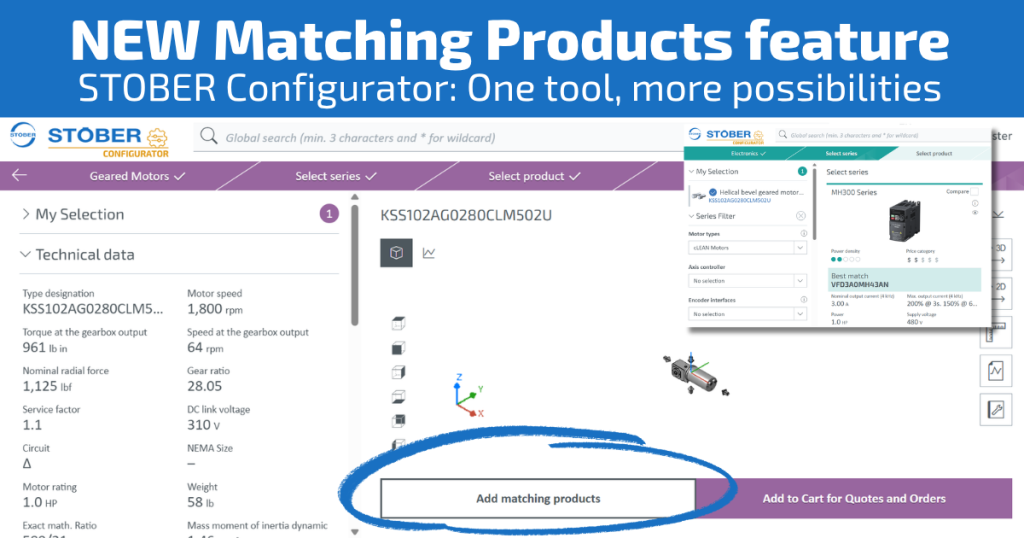 One tool, more possibilities: Discover complete STOBER solutions with new Matching Products feature
 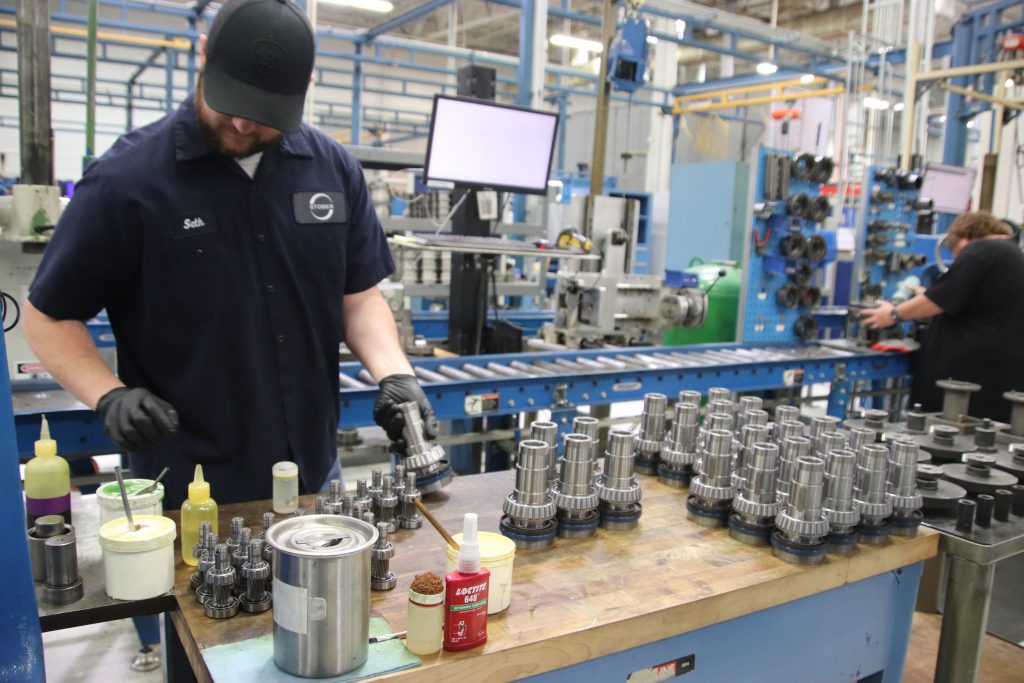 What are the main components of a gearbox?
 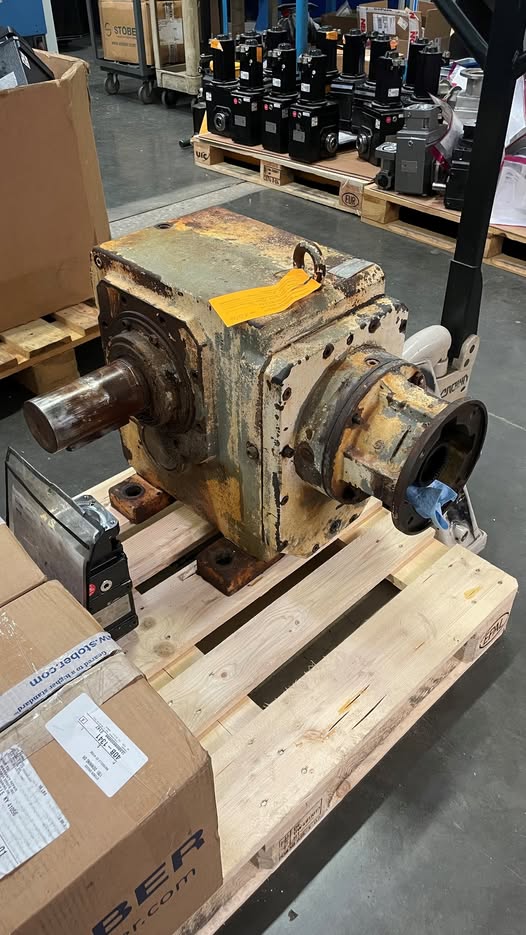 How long does a gearbox last? Lifespan, warning signs, and maintenance
 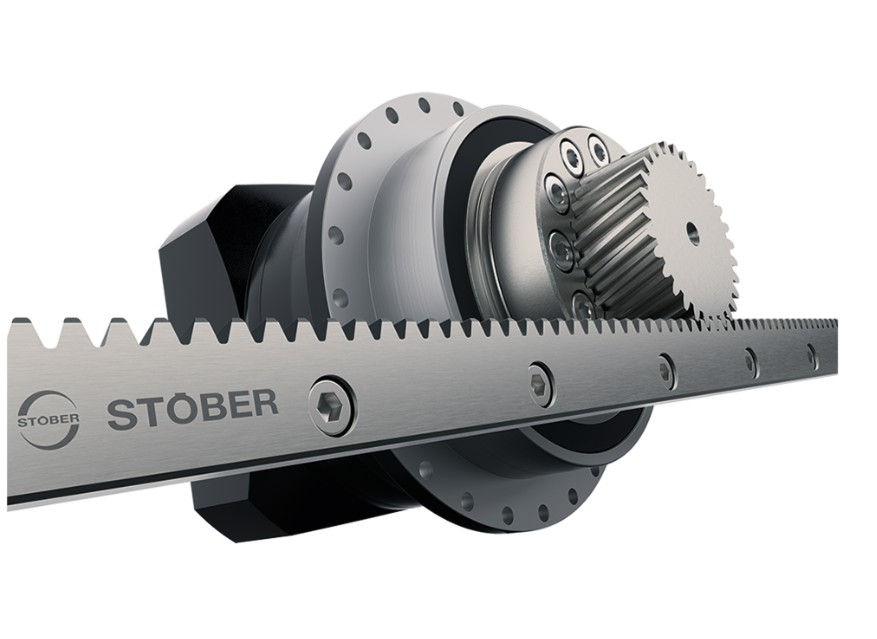 Rack and pinion systems for robotics: Benefits, design, and applications